

Sixth-Generation Fighter Jet: Who's Leading the Race?

The combat aircraft industry has crossed a threshold that only a handful of nations and consortia can claim to have entered.
On 21 March 2025, the U.S. Department of the Air Force handed Boeing a multi-billion dollar contract for the F-47 platform, and a few months earlier China’s Chengdu Aircraft Corporation rolled out a tri-engine flying wing now widely tagged as the J-36 prototype.
These are not incremental upgrades over the F-22 or J-20.
They are the first hardware expressions of what defense planners label the “sixth generation”, a class designed for adaptive engines, all-aspect very-low observability, manned-unmanned teaming, and a software-first combat philosophy that treats the airframe as one node in a battle network rather than a self-contained weapon.
For aerospace & defense stakeholders, the strategic question is thus no longer whether sixth-generation aircraft will exist.
The question is which nations will field them on schedule, which programs will collapse under their own industrial weight, and how the export market will reshape itself once the F-47 development contract and GCAP demonstrator begin to define a new technical baseline.
Let’s analyze everything in detail.
Recommended - Read Full Reports


Read All Reports
Table of Contents
What Is a Sixth-Generation Fighter Jet?
Adaptive Cycle Propulsion
Software-Defined Combat Identity
Manned-Unmanned Teaming As a First-Class Feature
Very Low Observability Across the Spectrum
The F-47: The First Officially Designated Sixth-Generation Fighter
Contract Award and Program Origin
Officially Released Specifications
Industrial Footprint and Production
Budget Trajectory
Increment Strategy
The F/A-XX: The Navy’s Carrier-Based Sixth-Generation Fighter
Contract Decision Set for August 2026
Funding Restoration
Carrier-Specific Design Constraints
The MUM-T Quarterback Concept
GCAP and the Tempest: The UK, Italy, and Japan Joint Effort
The Edgewing Joint Venture
First International Contract Awarded
The Combat Air Flying Demonstrator
Service Entry and Replacement Plan
Saudi Arabia and Other Potential Members
FCAS / SCAF: The Embattled Franco-German-Spanish Effort
The Industrial Dispute
April 2026 Deadline Failed?
What If FCAS Collapses?
The Stakes for European Sovereignty
China’s Sixth-Generation Push: J-36 and J-50
Chengdu J-36
Shenyang J-50
The Two-Track Strategy
Pentagon Assessment
Russia’s MiG-41 / PAK DP
Program Status
Structural Constraints
Doctrinal Role
India’s AMCA: A Fifth-Generation Bridge to the Sixth
Program Approval and Funding
Sixth-Generation Pathways
Industrial Capability Building
Other 6th-Gen Fighter Programs Worth Watching
Turkey’s Kaan / TF-X
South Korea’s KF-21 Block III
Sweden, Australia, Other Partners
Collaborative Combat Aircraft: The Drone Half of Sixth-Generation Air Power
YFQ-42A and YFQ-44A
Cost Architecture
Navy CCA Effort
Beyond Manned-Unmanned Teaming
Adaptive Cycle Propulsion: The Heart of the Sixth Generation
NGAP Program
How Adaptive Cycle Works
Schedule Risk
Directed Energy Weapons and Other Sixth-Generation Effectors
Onboard Lasers
Hypersonic Air-to-Air Concepts
Networked Effects
Cost, Affordability, and Industrial Risk
The Augustine’s Law Problem
Affordable Mass as a Counter Strategy
Industrial Base Concerns
Strategic and Geopolitical Implications
Indo-Pacific Theater
European Theater
The China Factor
Challenges and Risks
Risk 1
Risk 2
Risk 3
Risk 4
Risk 5
What Aerospace & Defense Stakeholders Should Watch?
Tier 1 Decisions
Supplier Tier Implications
Adjacent Markets
My Final Thoughts
What Is a Sixth-Generation Fighter Jet?
There’s no formal treaty or international body that defines fighter generations. The classification is an industry shorthand, and even the most authoritative voices treat it as a moving target.
That said, a working consensus has emerged among air staff documents, OEM literature, and program offices.
A sixth-generation fighter is a system of systems built around five interlocking pillars: extreme low observability across the spectrum, adaptive cycle propulsion, fused multi-domain sensing, native manned-unmanned teaming, and a software architecture flexible enough to accept rapid mission upgrades.
QUICK DEFINITION

Generation        Era         Defining Feature
----------------------------------------------------------
4th gen           1970s-90s   Multirole, fly-by-wire, BVR missiles
4.5 gen           2000s-10s   AESA radar, datalinks, partial RCS reduction
5th gen           2005-2025   All-aspect stealth, sensor fusion (F-22, F-35, J-20)
6th gen           2025-2040   Adaptive engines, MUM-T, AI co-pilot, open mission systems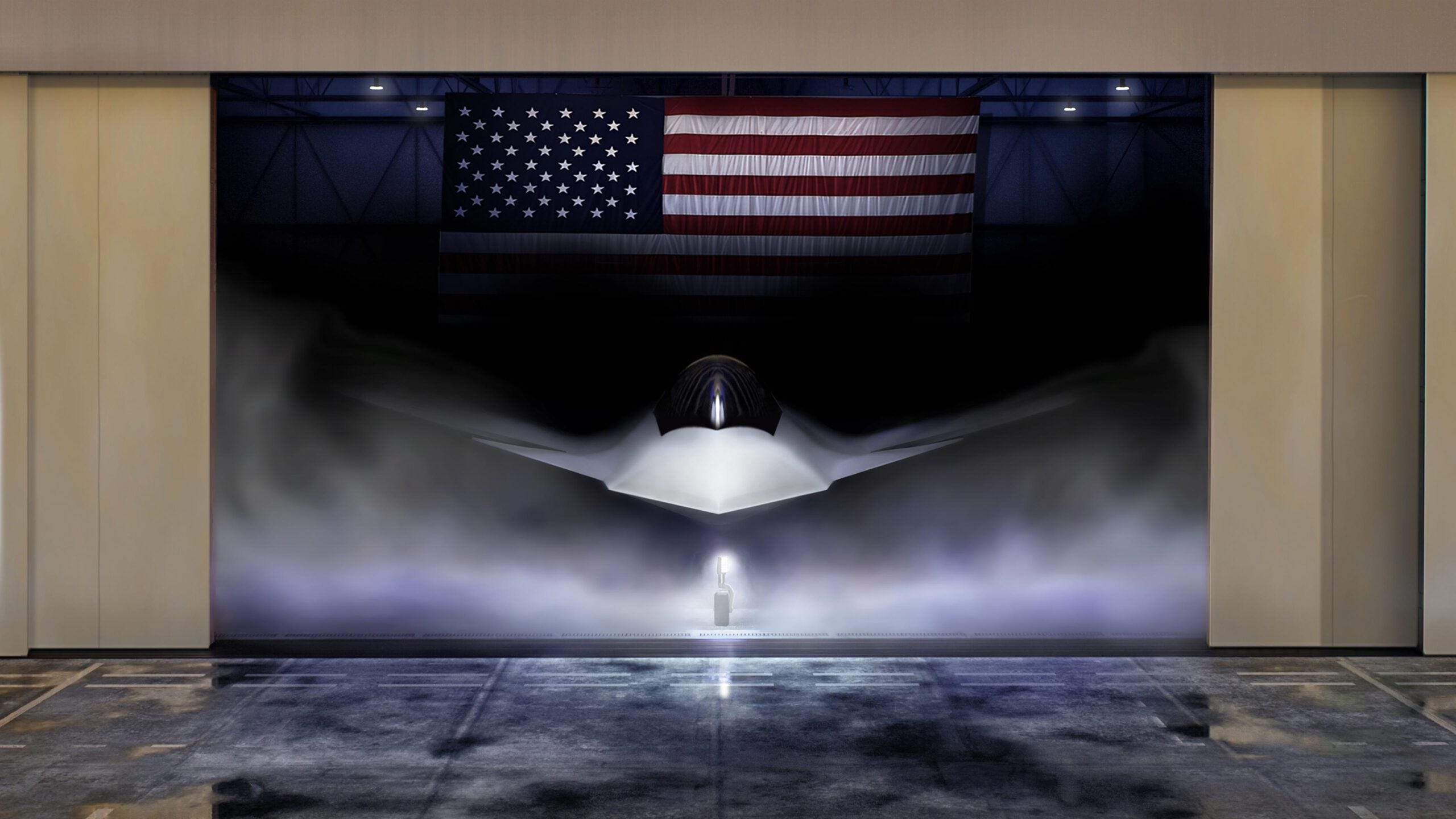
Adaptive Cycle Propulsion
The most concrete technical break with the 6th-generation aircraft is propulsion.
Both GE Aerospace and Pratt & Whitney hold $3.5 billion contracts for the Next Generation Adaptive Propulsion engine, an architecture that varies its bypass ratio in flight to deliver high-thrust performance during dash and high-bypass efficiency during cruise.


The published targets for the program are aggressive.
GE has stated its NGAP offering will deliver 20 percent greater thrust and 25 percent improved fuel consumption, translating to roughly 30 percent better range than the legacy F119 powering the F-22.
That kind of efficiency leap is what allows sixth-generation airframes to credibly claim combat radii in excess of 1,000 nautical miles without external tanks, a figure that fundamentally changes Pacific basing math.
Software-Defined Combat Identity
Sixth-generation aircraft are designed around mission systems that can absorb rapid software updates over a fleet’s life cycle.
Open architecture is the watchword.
The objective is to avoid the avionics lock-in that has slowed Block 4 development on the F-35 and to allow each squadron to receive new tactical behaviors on a timescale measured in months rather than years.
This is also why nearly every program now treats artificial intelligence (AI) as a baseline capability rather than a future increment.
AI handles sensor fusion, electronic warfare reaction, and pilot decision support, freeing the human in the cockpit to focus on tactical command of accompanying drones.
Manned-Unmanned Teaming As a First-Class Feature
The fifth generation treated autonomy as a research project.
The sixth generation treats it as the architecture itself.
Every credible program now describes the manned aircraft as a quarterback for unmanned wingmen, pushing sensors and weapons forward while the crewed platform remains in a less exposed envelope.
This shift has consequences for airframe sizing, weapons bay design, and crew workload models that ripple through every other engineering decision.
Very Low Observability Across the Spectrum
Stealth has not gone away, but the targets have widened.
Where the F-22 and F-35 were optimized primarily against X-band fire control radars, sixth-generation designs aim for low signatures across radar, infrared, electromagnetic emission, and visual bands.
Tailless layouts, embedded sensors, and managed exhaust paths are common to nearly every design now in flight test.
The F-47: The First Officially Designated Sixth-Generation Fighter
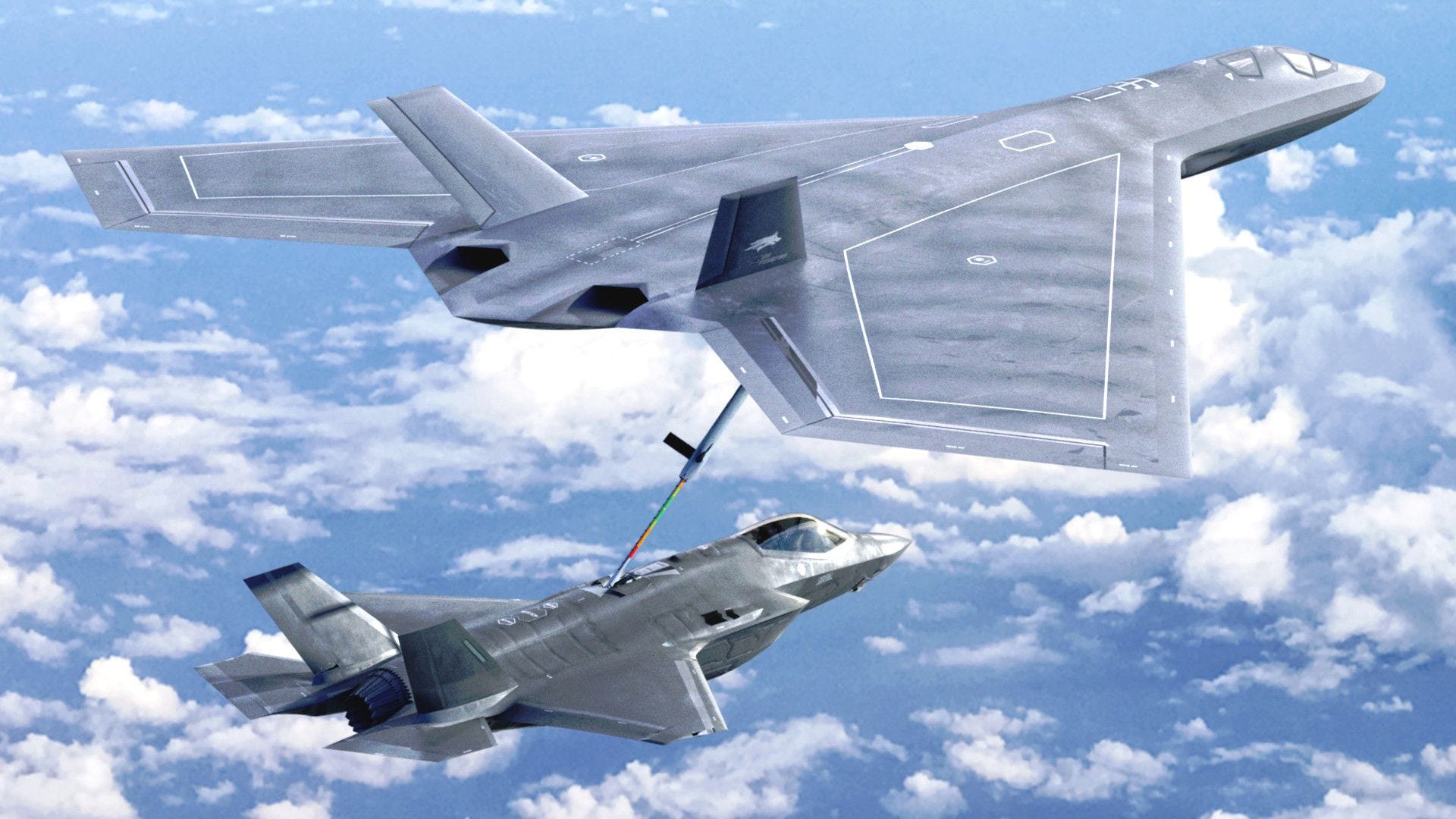
The F-47 stands as the first aircraft in the world publicly carrying a sixth-generation designation from a serving air force.
The designation itself is unusual in U.S. fighter numbering, leaping past the legacy sequence and signaling a deliberate political statement as well as a technical one.
Contract Award and Program Origin
Boeing was selected over Lockheed Martin for the engineering and manufacturing development phase of the Next Generation Air Dominance program.
Public reporting places the initial EMD contract value at approximately $20 billion, with total program value substantially higher across the multi-decade life cycle.

The selection ended several years of speculation about whether NGAD would survive a major program review.
After a 2024 pause, the Department of the Air Force concluded that sixth-generation manned air dominance was non-negotiable for the Pacific theater.
F-47 PROGRAM SNAPSHOT

Prime contractor:      Boeing Defense, Space & Security
Award date:            21 March 2025
EMD contract value:    ~$20 billion
Mission:               Air superiority, manned core of NGAD family
Status: EMD, manufacturing of first article underwayOfficially Released Specifications
The Air Force has been more transparent with F-47 specifications than is typical for a program at this stage, partly to manage congressional expectations. Chief of Staff General David Allvin released a graphic in May 2025 confirming a combat radius of 1,000+ nautical miles.
That figure is approximately a 70 percent improvement over the F-22 Raptor’s 590 nautical mile combat radius. For Indo-Pacific operational planners working with finite tanker assets and contested basing, the difference is decisive.
The Air Force has also confirmed a top speed of Mach 2 plus and stealth signatures more advanced than any predecessor in the inventory. Procurement targets exceed 185 airframes, replacing the F-22 fleet on a more than one-to-one basis.
Industrial Footprint and Production
The first F-47 article is reportedly under construction at Boeing’s St. Louis facility. The company has invested heavily to consolidate fighter production capability after the closure of the F/A-18 line, and the F-47 is the centerpiece of that strategy.
Production scaling is the next great test.
Boeing must demonstrate that it can deliver an aircraft of unprecedented complexity at a tempo that justifies the investment, and that it can do so without the cost overruns that have plagued the KC-46 and T-7 programs.
Budget Trajectory
The Pentagon has requested more than $4 billion across fiscal 2026 for F-47 and CCA development. The fiscal 2027 request climbs to roughly $5 billion for the F-47 alone, a $1.5 billion increase year over year.
These numbers reflect a deliberate policy choice. The Air Force has accepted near-term pain in modernization line items to fund the manned sixth-generation capability before adversary parity erodes the qualitative edge.
F-47 FUNDING TIMELINE

Fiscal Year   Funding Element                     Approx. Amount
---------------------------------------------------------------
FY 2025       Risk reduction and EMD prep         $3.4 billion
FY 2026       EMD ramp + reconciliation funds     $3.4 billion combined
FY 2027       EMD acceleration request            $5.0 billion
Increment Strategy
Air Force leadership has hinted that the F-47 program is structured to deliver multiple variants in increments.
This avoids the trap of trying to bake every requirement into a Block 1 jet and leverages the open mission systems architecture to add capability as the threat picture evolves.
The approach also creates room for export variants down the line, although the Air Force has not committed to releasing the platform internationally.
The F/A-XX: The Navy’s Carrier-Based Sixth-Generation Fighter
The U.S. Navy’s F/A-XX is the carrier-launched complement to the F-47. It is intended to replace the F/A-18E/F Super Hornet beginning in the early 2030s and become the central manned platform on the Ford-class carrier deck.
Contract Decision Set for August 2026
After a long delay, Pentagon leadership has confirmed that the F/A-XX selection will be made in August 2026. Defense Secretary Pete Hegseth publicly committed to the August timeline in April, ending months of uncertainty about whether the program would survive at all.
The two finalists are Boeing and Northrop Grumman. Lockheed Martin was not included after the NGAD process. Northrop has publicly defended its industrial capacity to deliver F/A-XX while continuing B-21 Raider production at Palmdale.
Funding Restoration
In a notable congressional intervention, lawmakers appropriated approximately $1.69 billion to keep F/A-XX funded through fiscal 2026 after the Pentagon proposed dramatic cuts.
This is the kind of legislative push back that often shapes program survival in the early years.
F/A-XX KEY FACTS

Program type:        Carrier-based 6th gen multirole
Finalists:           Boeing, Northrop Grumman
Selection target:    August 2026
FY 2026 funding:     ~$1.69 billion (Congressional add)
Mission focus:       Carrier strike, fleet air defense, MUM-T quarterback
Replaces: F/A-18E/F Super HornetCarrier-Specific Design Constraints
Building a sixth-generation aircraft for catapult launch and arrested recovery imposes constraints that the F-47 does not face. Tail hook integration, folding wings for hangar storage, and corrosion resistance for prolonged maritime exposure all add weight and complexity.
Carrier operations also mean the F/A-XX cannot match the F-47 for combat radius in the most aggressive configurations. The trade-off is platform availability and forward presence at sea, which an Air Force jet cannot replicate.
The MUM-T Quarterback Concept
Naval aviation leadership has been explicit about the F/A-XX’s role as a manned-unmanned teaming quarterback, commanding cooperative drones launched from carriers and amphibious assault ships.
The Navy has its own collaborative aircraft effort running in parallel, with Anduril and General Atomics signaling adapted versions of their Air Force CCA designs.
This integration is the strategic differentiator. The carrier air wing of 2035 is intended to look fundamentally different from the all-Super Hornet wings of 2020.
GCAP and the Tempest: The UK, Italy, and Japan Joint Effort
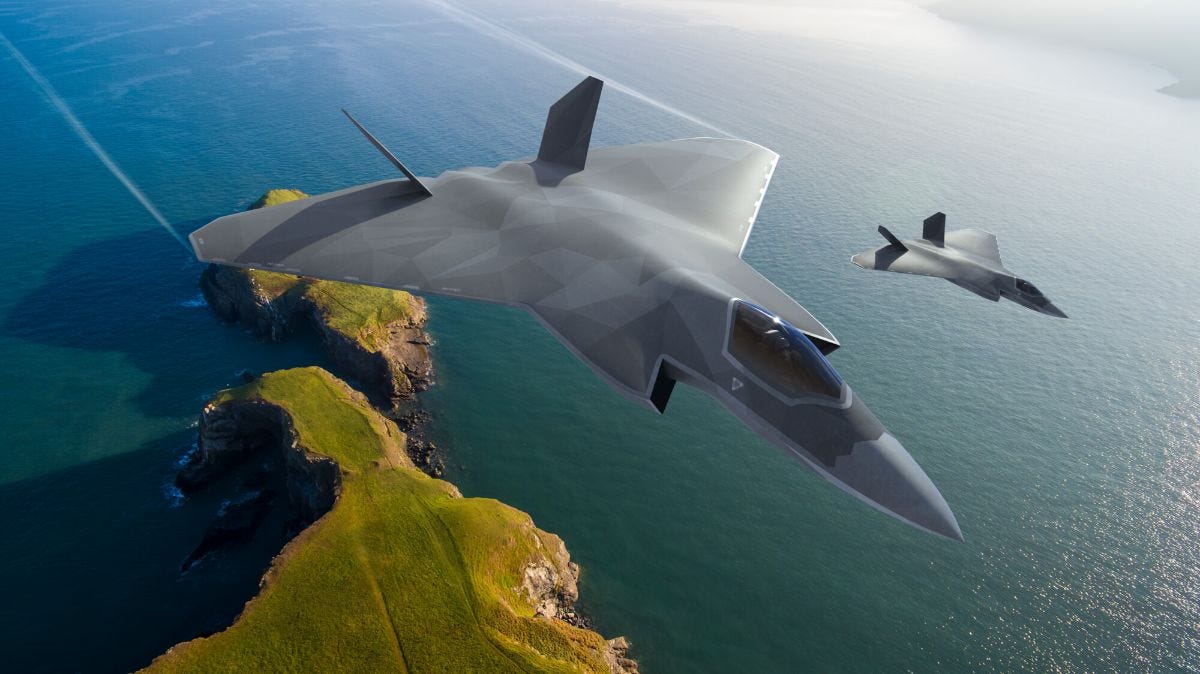
The Global Combat Air Programme is the most ambitious trilateral defense aviation cooperation in modern history.
The United Kingdom, Italy, and Japan signed the founding treaty in December 2022, and the program now sits at the heart of European and Indo-Pacific air power planning.
The Edgewing Joint Venture
In June 2025, the GCAP industrial partners formally launched Edgewing as the integrated joint venture responsible for design and development. Equity is split equally among BAE Systems, Leonardo, and Japan Aircraft Industrial Enhancement Company.


Edgewing will hold the design authority for the airframe across its operational life. This is structurally distinct from how Eurofighter was governed, and the lessons from that earlier program are clearly informing the new arrangement.
GCAP / EDGEWING SNAPSHOT

Partner nations:     United Kingdom, Italy, Japan
JV company:          Edgewing (formed June 2025)
JV partners:         BAE Systems, Leonardo, JAIEC
Demonstrator flight: End of 2027
Service entry:       2035
Suppliers: ~600 UK, ~400 Italy and Japan combinedFirst International Contract Awarded
The GCAP International Government Organisation, the trilateral oversight body, placed its first contract with Edgewing in April 2026. The contract runs through June 2026 and funds intensified design activities ahead of the demonstrator first flight.
The Combat Air Flying Demonstrator
BAE Systems publicly revealed the design of the combat air flying demonstrator in 2025, the first new UK supersonic crewed combat aircraft design in approximately four decades.
The demonstrator is a single-cockpit, twin-engine, canted twin-tail configuration in production at Warton in Lancashire.
Two thirds of the demonstrator airframe is reportedly already complete. First flight is planned for the end of 2027, with the exact date dependent on systems integration progress.
The demonstrator is not the production aircraft. It is a flying technology integration platform. Lessons from its flight test campaign will be folded into the production Tempest design as it matures.
Service Entry and Replacement Plan
The trilateral target is service entry in 2035.
Japan has formally confirmed the 2035 timeline in its budget process, replacing the Mitsubishi F-2. The UK aircraft will replace the Eurofighter Typhoon, and Italy’s GCAP jets will succeed its Typhoons as well.
This is a tight schedule by historical standards. Eurofighter took roughly two decades from concept to operational entry.
GCAP is attempting the same journey in approximately 13 years, leaning on digital engineering, additive manufacturing, and lessons learned from previous European fighter programs.
Saudi Arabia and Other Potential Members
Saudi Arabia has lobbied for membership since at least 2023. Reporting indicates the three founding nations are in tacit agreement that Riyadh could join, although Japan has been the most cautious partner given Tokyo’s strict export rules and its constitutional considerations.
Canada has also signaled interest. Reports suggest Ottawa is examining GCAP as a complement to or partial substitute for additional F-35 acquisitions, driven by both industrial offset opportunities and political risk diversification.
GCAP EXPANSION CANDIDATES

Country         Status                Role under discussion
---------------------------------------------------------
Saudi Arabia    Active discussions    Tier 2 partner / industrial offset
Canada          Exploratory           Operator / industrial participant
Australia       Watching              Partial interest, no formal bid
Sweden          Independent path      Considering own next gen approach
FCAS / SCAF: The Embattled Franco-German-Spanish Effort
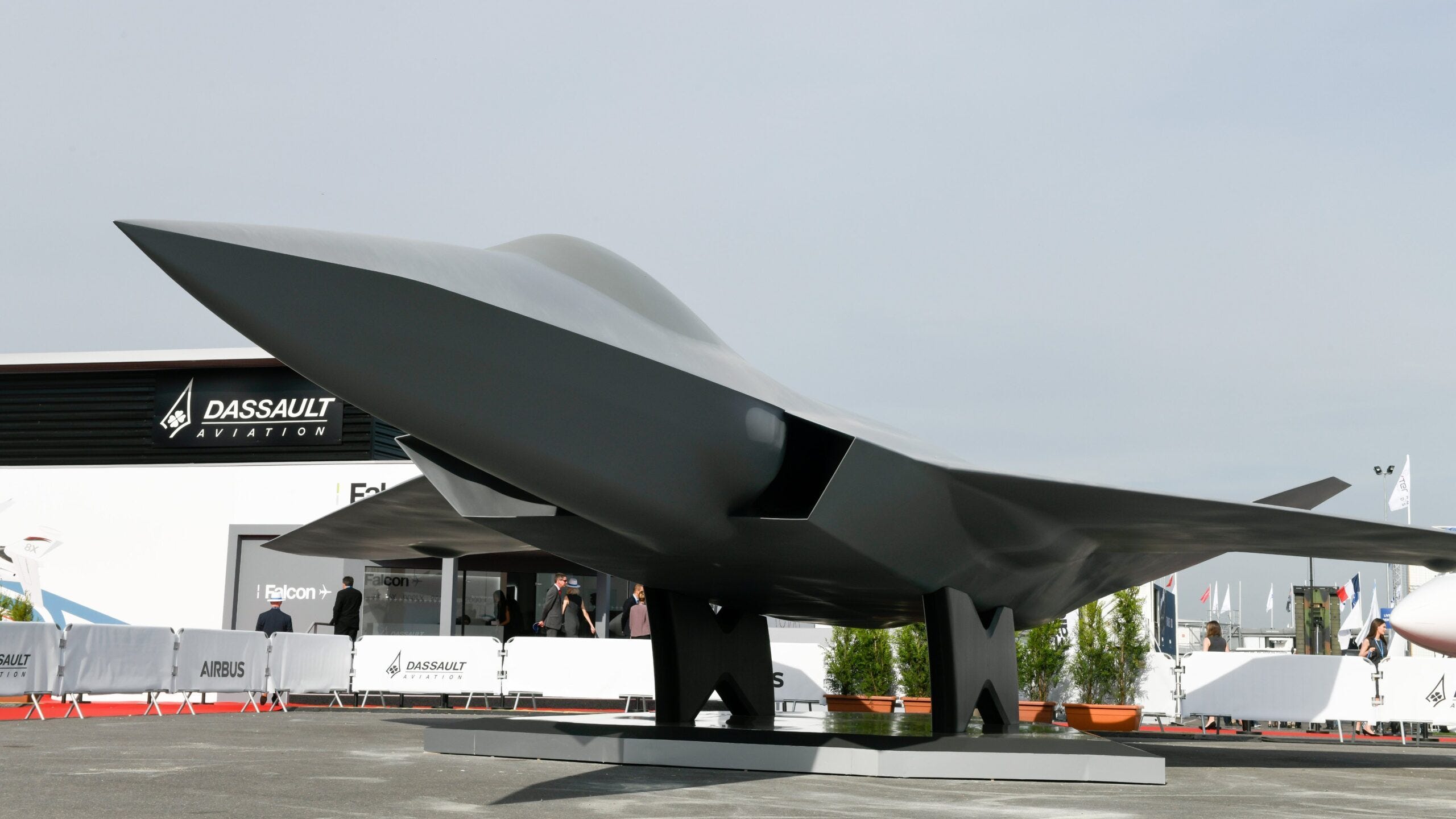
The Future Combat Air System, known in France as Système de Combat Aérien du Futur, is the European program that has struggled most visibly.
Conceived as a French-German joint endeavor with Spain joining later, the program has spent much of 2025 and early 2026 fighting for survival.
The Industrial Dispute
The fundamental quarrel is between Dassault Aviation and Airbus Defence and Space over work share and design authority for the Next Generation Fighter, the manned core of FCAS.
Dassault has insisted on a clear lead role mirroring its experience with the Rafale, while Airbus has resisted what it characterizes as an unbalanced arrangement.


In March 2026, Dassault CEO Eric Trappier publicly stated that Phase 2 negotiations had not even begun due to unresolved governance disputes. Phase 1 work is winding down without a clear path to the next stage.
April 2026 Deadline Failed?
Berlin set an internal deadline of April 2026 to resolve the impasse or accept that FCAS as currently constituted has failed.
Comments from German Chancellor Friedrich Merz and Defense Minister Boris Pistorius have been read by analysts as preparing the ground for a public split.
Some German voices, including CDU defense spokesperson Thomas Erndl, have suggested France should pursue its own manned fighter while Germany and Spain seek alternative partners.
Whether this materializes as a clean break or a managed wind-down remains unsettled.
FCAS PROGRAM STATUS NOTE

Founding partners:    France, Germany, Spain
Phase 1 status:       Winding down, no Phase 2 contract signed
Lead industry:        Dassault Aviation (NGF), Airbus DS (effectors), Indra (sensors)
Demonstrator flight:  Originally 2027, now uncertain
Service entry:        Originally 2040
Current outlook: High risk of collapse or fundamental restructuringWhat If FCAS Collapses?
The contingency planning is already underway in Berlin and Madrid. Germany has been in informal contact with the GCAP partners, and reporting suggests an eventual German pivot toward GCAP is plausible if FCAS dissolves entirely.
For France, the alternative is a national program likely structured around Dassault’s existing nEUROn unmanned combat air vehicle work and an evolved Rafale variant called the F5 standard. Paris has the industrial base to attempt a national sixth-generation aircraft, but the unit costs would be punishing without partners.
President Emmanuel Macron has publicly insisted that FCAS is not dead and that he hopes to discuss its future with Berlin. The political signaling out of Paris is more positive than the industrial reality on the ground.
The Stakes for European Sovereignty
FCAS was always more than a fighter program. It was the visible expression of a Franco-German political commitment to European defense industrial sovereignty.
A collapse would carry geopolitical consequences far beyond aircraft manufacturing, potentially reshaping how the EU thinks about strategic autonomy in the aerospace sector.
China’s Sixth-Generation Push: J-36 and J-50
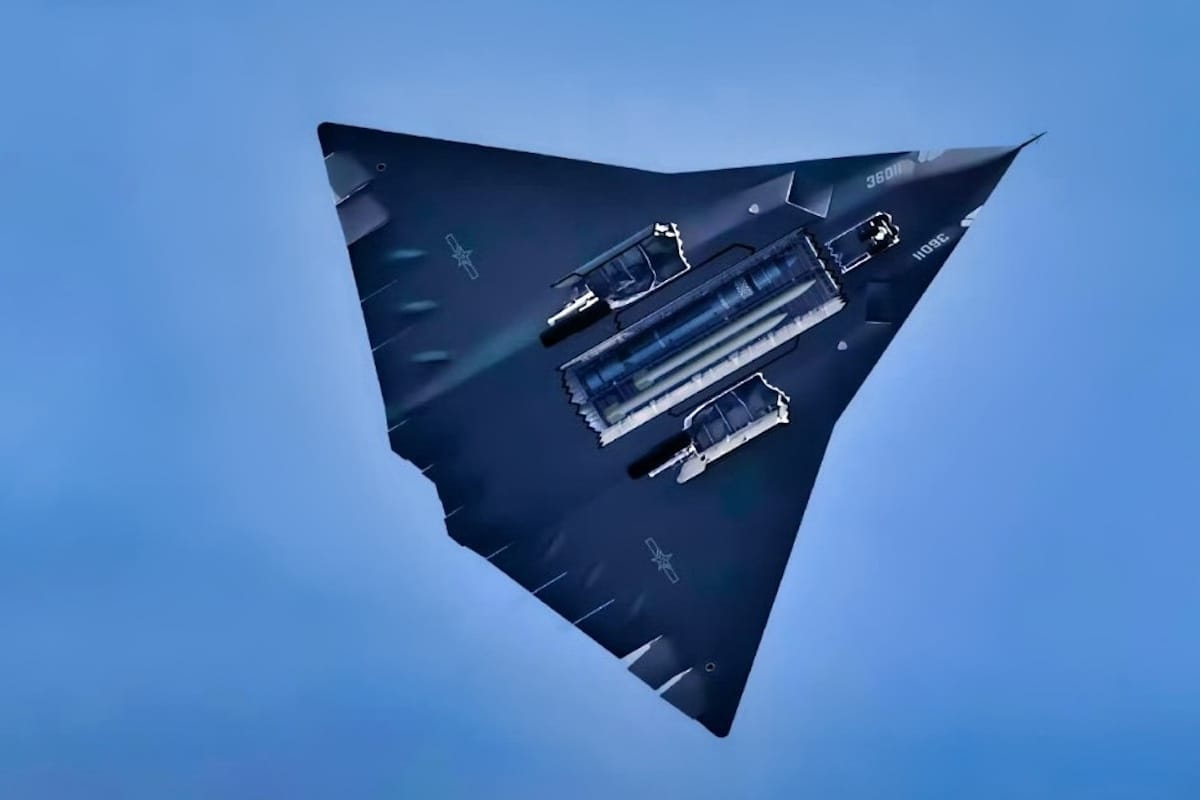
China’s emergence as a credible sixth-generation fighter producer is the most consequential aerospace development of the past two years.
Two prototype lines are now in flight test, both unveiled with a deliberate visibility that breaks with traditional PLA Air Force secrecy.
Chengdu J-36
The Chengdu Aircraft Corporation prototype was first observed in test flight on 26 December 2024. Its serial number, 36011, generated the J-36 designation that has stuck in the Western analytical community.

The most striking feature is the trijet, tailless flying wing configuration.
Three engines is unusual in modern fighter design and points to an emphasis on extreme range, large internal weapons capacity, and the ability to absorb a single engine loss without losing the airframe.
The aircraft is large. Estimates of internal fuel capacity run from 13 to 15 tons, placing it closer to a regional bomber than a traditional fighter in raw size. This mirrors PLA strategic priorities focused on the Western Pacific and the need to operate at long range from mainland bases against U.S. carrier groups.
A second J-36 prototype with significant design tweaks to inlets, landing gear, and exhaust paths has emerged in test flight.
This iteration suggests a healthy development tempo and a willingness to accept design changes between prototype articles.
J-36 PROFILE

Designation:           Chengdu J-36 (analyst-applied)
First flight:          26 December 2024
Configuration:         Tailless trijet flying wing
Estimated fuel:        13-15 tons internal
Mission profile:       Long-range air dominance / strike
Prototype count: 3 reportedShenyang J-50
The Shenyang Aircraft Corporation prototype was observed almost simultaneously, in Shenyang in December 2024. It is smaller than the J-36 and configured around a twin-engine, tailless lambda wing layout.
The lambda wing is significant. It combines leading edge and trailing edge sweep with articulating swivelable wing tipsthat act as control surfaces, eliminating the need for vertical stabilizers and reducing radar cross section dramatically.
Length and wingspan are both reportedly in the 22 meter range, an unusual proportion that suggests a heavy emphasis on internal weapons volume and fuel. New imagery and video from 2026 indicates the J-50 is in an active flight campaign.
The Two-Track Strategy
The simultaneous existence of two distinct prototype lines from different design bureaus is a pattern reminiscent of how China developed the J-20 and J-31/J-35 in parallel. It hedges development risk and allows specialization.
The most likely division of labor is that the J-36 fills a long-range air dominance and strike role typically associated with land-based forces, while a derivative of the J-50 may eventually deploy from the new Chinese carrier force, given the carrier landing system patents recently filed by the J-36 design team.
Pentagon Assessment
The U.S. Department of Defense has formally acknowledged the accelerated Chinese development pace in its annual report on Chinese military power.
The competitive timing question now confronts U.S. planners.
If Chinese industry can move from first flight to operational squadrons faster than U.S. industry, the qualitative edge that NGAD assumes may prove fleeting.
J-50 PROFILE

Designation:           Shenyang J-50 (analyst-applied)
First observed:        December 2024
Configuration:         Tailless twinjet, lambda wing with swiveling tips
Estimated dimensions:  ~22m length / ~22m wingspan
Likely mission:        Tactical fighter, possible carrier variant
Status:                Active flight test 2026
Russia’s MiG-41 / PAK DP
Russia’s sixth-generation effort exists primarily on paper.
The Mikoyan Perspective Aviation Complex of the Long Range Interceptor program, more commonly called the MiG-41, is intended as a successor to the legendary MiG-31 Foxhound long range interceptor.
Program Status
In September 2025, retired Russian Air Force Major General Vladimir Popov stated publicly that the MiG-41 had completed its external design phase. Senior Russian defense voices including analyst Vasily Kashin have framed the project as a sixth-generation effort.
That framing is contested.
Many Western analysts argue that without confirmed adaptive cycle propulsion, mature MUM-T integration, or a flying prototype, the MiG-41 is more accurately described as a paper concept rather than a fielded sixth generation aircraft.
Structural Constraints
The Russian aerospace industry faces severe constraints stemming from the post-2022 sanctions environment.
Access to advanced semiconductors, composite materials, and high-performance engine components is restricted. The Su-57 Felon program, intended as a fifth-generation aircraft, has struggled to scale production for these reasons.
Stretching limited industrial capacity to a sixth-generation interceptor alongside Su-57 production is a credibility test that Russian industry has yet to demonstrate it can pass.
Doctrinal Role
Even if hardware emerges, the MiG-41 is conceived narrowly as a Mach 4 to 5 interceptor, focused on long-range air defense and theoretically anti-satellite roles.
It is not directly comparable to the multirole sixth-generation aircraft emerging in the United States, Europe, or China.
India’s AMCA: A Fifth-Generation Bridge to the Sixth
India’s Advanced Medium Combat Aircraft program is officially classified as fifth-generation, but it represents an essential bridging step toward Indian sixth-generation ambitions and merits inclusion in any honest survey.
Program Approval and Funding
In May 2025, the Defence Acquisition Council approved the AMCA execution model, opening competitive participation by both the public and private sector industry. The program was earlier cleared in March 2024 with an initial budget of approximately ₹15,000 crore.
The Indian Air Force has signaled it intends to induct seven squadrons, approximately 126 aircraft in initial planning, with internal discussions about expanding to over 250 airframes in the longer term.
AMCA SNAPSHOT

Lead agency:        Aeronautical Development Agency
Status:             Detailed design phase
Initial budget:     ₹15,000 crore (FY24)
First prototype:    Targeted 2026-27
First flight:       Targeted late 2020s
Service entry:      Mid-2030s
Squadron target:    7 squadrons (~126 aircraft)
Sixth-Generation Pathways
Indian air staff have publicly explored joining a European sixth-generation program as an industrial partner.
The reasoning is straightforward.
China has already revealed J-36 and J-50 prototypes, and India cannot allow a generational gap to open in its air superiority capability.
The realistic Indian pathway is dual-track. AMCA delivers sovereign fifth-generation capability in the early 2030s while a parallel sixth-generation effort, possibly in partnership with GCAP or FCAS successor arrangements, follows behind.
Industrial Capability Building
The AMCA program is also a deliberate industrial capability development effort.
It is forcing Indian industry to master technologies including all-aspect stealth shaping, internal weapons bays, advanced composites, and AESA radar integration.
These are prerequisites for any future indigenous sixth-generation effort.
Other 6th-Gen Fighter Programs Worth Watching
Turkey’s Kaan / TF-X
Turkish Aerospace Industries’ Kaan program, formerly known as TF-X and MMU, is unambiguously fifth-generation.
The aircraft has flown a prototype and is on track for first delivery to the Turkish Air Force toward the end of this decade.
Turkey has not formally announced a sixth-generation follow-on, but Ankara’s industrial strategy increasingly emphasizes air system sovereignty, and a Block II evolution of Kaan with sixth-generation features is plausible by the early 2030s.
South Korea’s KF-21 Block III
The KAI KF-21 Boramae first flew in July 2022 and entered mass production in July 2024.
Korea Aerospace Industries has publicly stated plans to evolve the KF-21 through Block III into a fifth-generation stealth standard, with a longer-term goal of a sixth-generation derivative.

The Korean government is investing approximately 630 billion won in Block III stealth-focused upgrades.
The pathway parallels India’s. Master fifth-generation domestically, then move to sixth-generation in a follow-on program.
Sweden, Australia, Other Partners
Sweden has historically pursued its own fighter path with the Saab Gripen line.
The country is now considering a sixth-generation pathway, although the small market size makes a fully national program economically improbable. Joining GCAP or a European successor to FCAS is more likely.
Australia is publicly committed to F-35 and is investing heavily in the MQ-28 Ghost Bat collaborative aircraft. Whether Canberra eventually buys into a manned sixth-generation aircraft remains an open question, with timing tied to F-35A operational lifespan decisions.
SECONDARY PROGRAM SNAPSHOT

Country         Aircraft         Generation Claim    Realistic Path
-----------------------------------------------------------------
Turkey          Kaan / TF-X      5th gen             6th gen Block evolution
South Korea     KF-21 Block III  5th gen base        6th gen successor
Sweden          TBD              Studying            Likely partnership
Australia       MQ-28 + F-35     Bridge              GCAP or US partnership